The Quick and The Dead
A continuation of heroics in the Orient

On the 20th of December, I ran the second session of Boothill in Afghanistan. As noted in my previous article, we made a number of rules adjustments to better capture the Swashbuckling stories found in Robert E. Howard’s Desert Tales. Where characters such as El Borak and El Shirukh battle with a myriad of foes both European and Oriental; with their battles often deciding the fate of empires! These stories, are to put it simply: Fun, gripping, and evocative. Whilst I can’t say they’re the best works I’ve read by Howard, they are good fuel for anyone wanting inspiration outside of the standard D&D fair.
As stated in a note I posted a couple of weeks prior, the focus of this article will be around using the 1st edition Dungeon Master’s Guide to more effectively run your Boothill game. This lesson in adapting rules from one system to another will hopefully allow you to improve whatever game you prefer to play.
To briefly describe the events of the last session, the players El Borat, Lord Elfstone, and their new compatriot Jean-Jacques Jean Valjean Pierre-Polnareff, a French Gunslinger from parts unknown - decided to scout out the camp of Sikh rebels they fought in the prior session. They come up with a silly plan that long story short, leads to El Borat’s tragic death, Elfstone being wounded, and the Frenchman proving his deadly skill with his pistols against a band of Afghani tribesman who have sided with the Sikhs as a sort of mercenary/auxiliary force. Effectively the group discovered the Sikhs are arming the weaker tribes with modern weaponry to destroy their enemies. The Sikhs take a cut of the treasure - namely food and women, to expand their position and draw others to their cause. The group upon reporting this to the tribal leader one, Alwad ibn Assur, they decide to meet up with some new Characters - Afghuli ibn Afghuli and the Mad Arab Salahim. You can read my general report of the session events on Twitter.
We will really focus on three aspects of the session, creating an animal encounter on the fly, dealing with surprise, and using oracular dice to generate content for players to engage with in-session. We will accordingly avoid more story aspects of the session in favor of mechanical discussion, please refer to the previously linked reports if you prefer story over mechanics.
Firstly, we must understand that Boothill is foremost a game for Wild West Skirmishes. Most of its 60 page length is dedicated to character creation, combat rules, as well as an example play scenario that teaches you how to play the game. Rules for campaign play come in the form of a few pages for gambling, tracking, healing, and some suggestions for generating NPCs on the fly. This brevity ties into the presumption of play in each session will be more episodic in nature. These snapshots of wild adventure and fun, usually end quite neatly with a dynamic shootout. This fits the milieu of the Western genre, and conviently fits the format of a pulp adventure story.
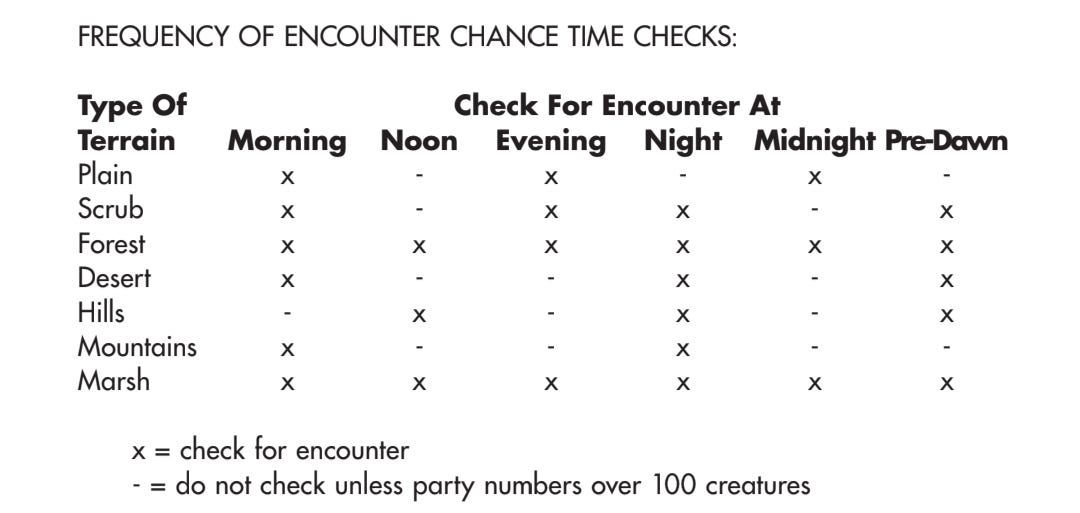
However while this brevity of rules makes play easy and accessible, and in turn allows the Referee more freedom in interpretation - it does also lead to issues for more long-form games. Many rules we take for granted, such as Overland Encounters, are simply not present. While it is likely these rules can be found in one of Boothill’s many supplements, I generally find it wiser to refer to one book over several. This is where the AD&D DMG comes into play. We will refer specifically to the overland section, where one can find easy rules for navigating the wilderness, a process to check encounters by terrain, as well as encounter tables for each terrain type. You can find the table to determine the number of encounter checks for each terrain, on page 48 of the DMG as seen here:
The specific encounter tables can be found page 183 onward:
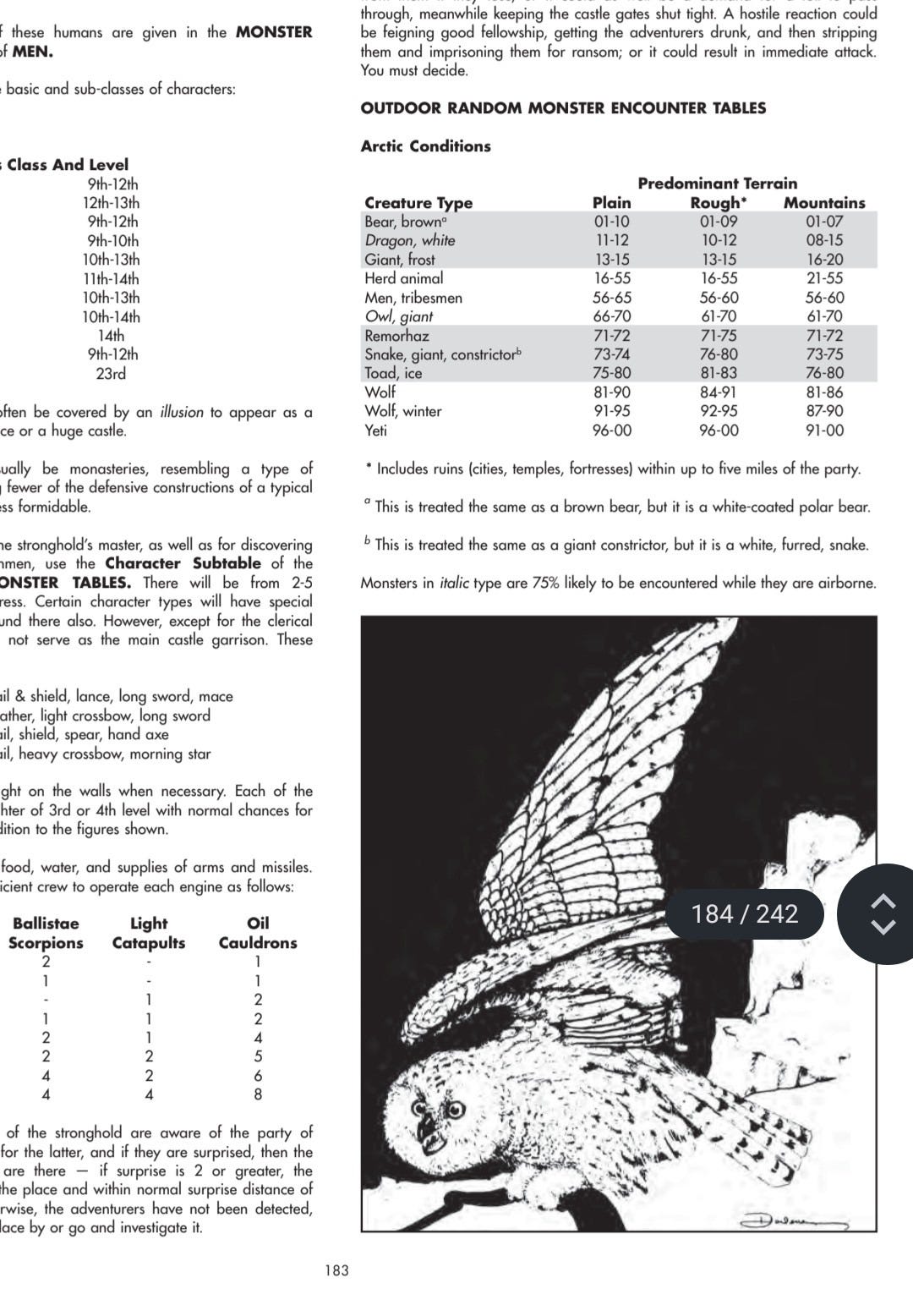
Due to AD&D’s status as a fantasy game, some creatures such as the I rolled during the session, was a Hell Hound. Hell Hounds of course do not fit the vibe or milieu of an El Borak story. These stories as a rule are more grounded, magic, curses, etc. are mere superstition. However, this ill-fitting result serves to remind us of the purpose of tables. Tables do not dictate the milieu, you do, table exist to inform and inspire your decisions. It is up to you as the referee, to determine what is and isn’t allowed, and sometimes you’ll need to be creative on the fly to make the game great.
Referring back to the stats of a Hellhound, they’re 4-7 hit die creatures. Since the players in my game are the mountains of India, what real life animal is suitably stealthy, quadrupedal, and well scary enough? You can end up going a few different directions - I ended up going up with a Bengal Tiger, Tigers are 5+5 hit die creatures, basically the average HP result of around a 6 hit die creature. This mind you, is towards the high end of the 4-7 range previously mentioned.
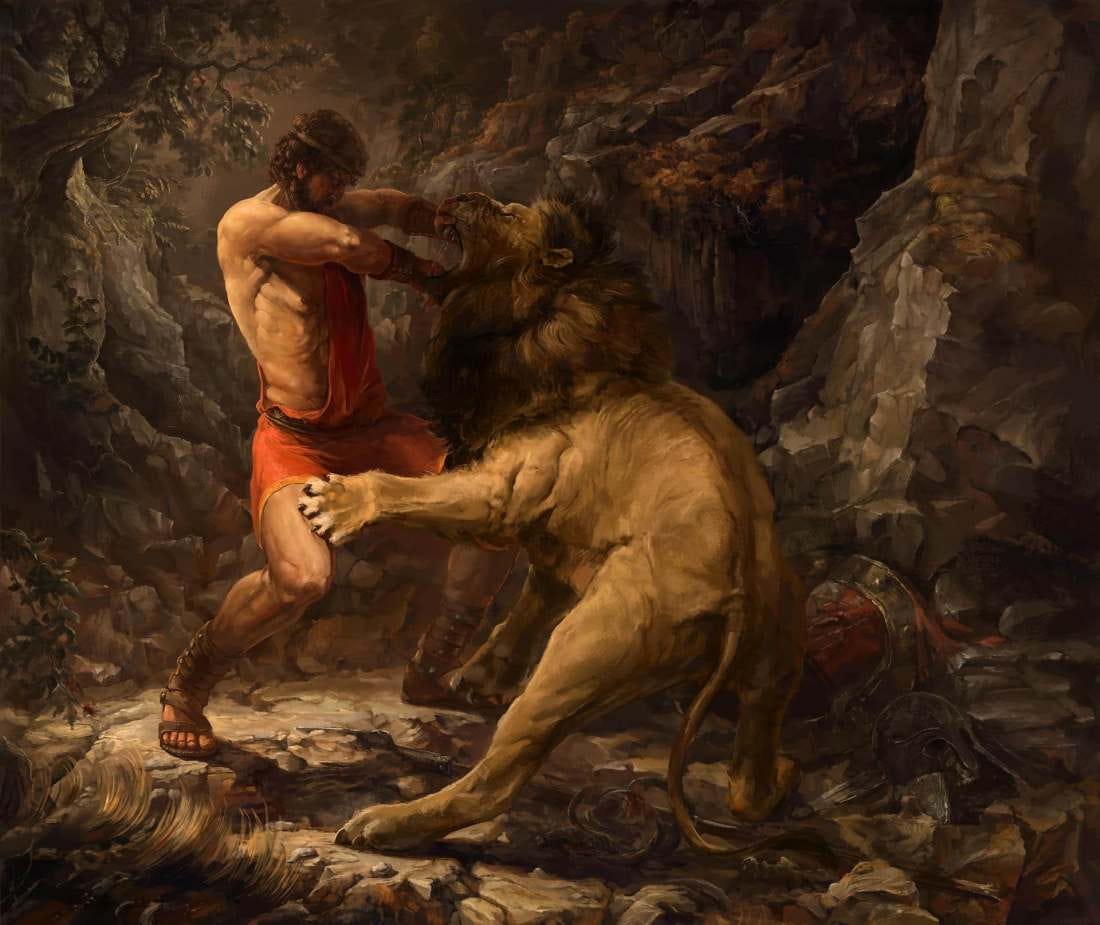
Now is a tiger in the mountains the most realistic? Yes and no, depending on the period their range can vary; regardless it fits the vibe of an El Borak story. Whilst most stories involve human combatants, El Borak is no stranger to fighting animals. Hell, the guy fought a Gorilla in the mountains of Afghanistan! Regardless, this random encounter turned into a very memorable event, as the group elected to fight the Tiger both in melee and at range! The battle ended with one player character blowing the tiger’s head off with a point blank blast of buckshot after his sword was found to be insufficient. The HP of the creature was determined by considering the average inexperienced Boothill gunfighter is around a 2nd level fighter in AD&D terms:
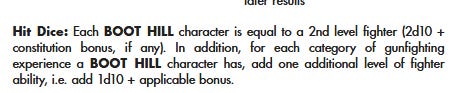
The average Boothill character has around 14 wounds:
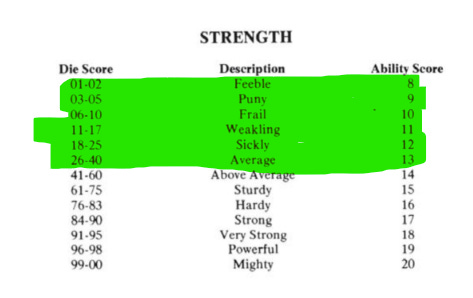
The average result of 2d10, is about 10-12, but 14 is fairly reasonable especially considering Constitution bonuses, etc. For our purposes we will use the lower end of about 10-12 for easy math. This allows us to quickly scale AD&D monsters to Boothill. According to this method a 5+5 hit die creature in Boothill terms would have around 30-36 wounds, as it would be 2 sets of 12 to account for 4 of the 5 hit dice, with the remaining 1 hit dice + 5 being equivalent to another 12 hit points worth, as its close enough to 2 hit dice. One could also just elect to roll hit dice and take the result as is, however I went with the quick calculation instead to keep the numbers neater. Other than that the discerning Referee would just roll for flat speed and bravery. Combat would be resolved via the brawling table, treating successful hits as a gun shot for hit location determination and severity. As the game suggests for melee weapons, at base. This ensures any wild animals are both hardy, and most importantly deadly. This method was developed by me on the fly, taking about 3 minutes to quickly work through, and in turn created a memorable encounter.
It was later revealed to me that Fluid the Druid, had also developed his own rules for animals in Boothill. Reading them, I personally find them quite enjoyable and will have to ponder if I want to continue down my own homebrew path, or simply rely on the critical thinking of another true intellectual. One thing I will however use is his custom to hit location/severity tables that are in turn tied to the animal’s size. It just makes sense that different animals have different anatomy and would accordingly not use the same table as the one designed for Gunfighters! It also serves to make larger animals harder to kill. Forcing fights with truly savage beasts to be that much more interesting. This coupled with his own suggestions that affect each animal’s combat ability, also serves to create a more complete game.
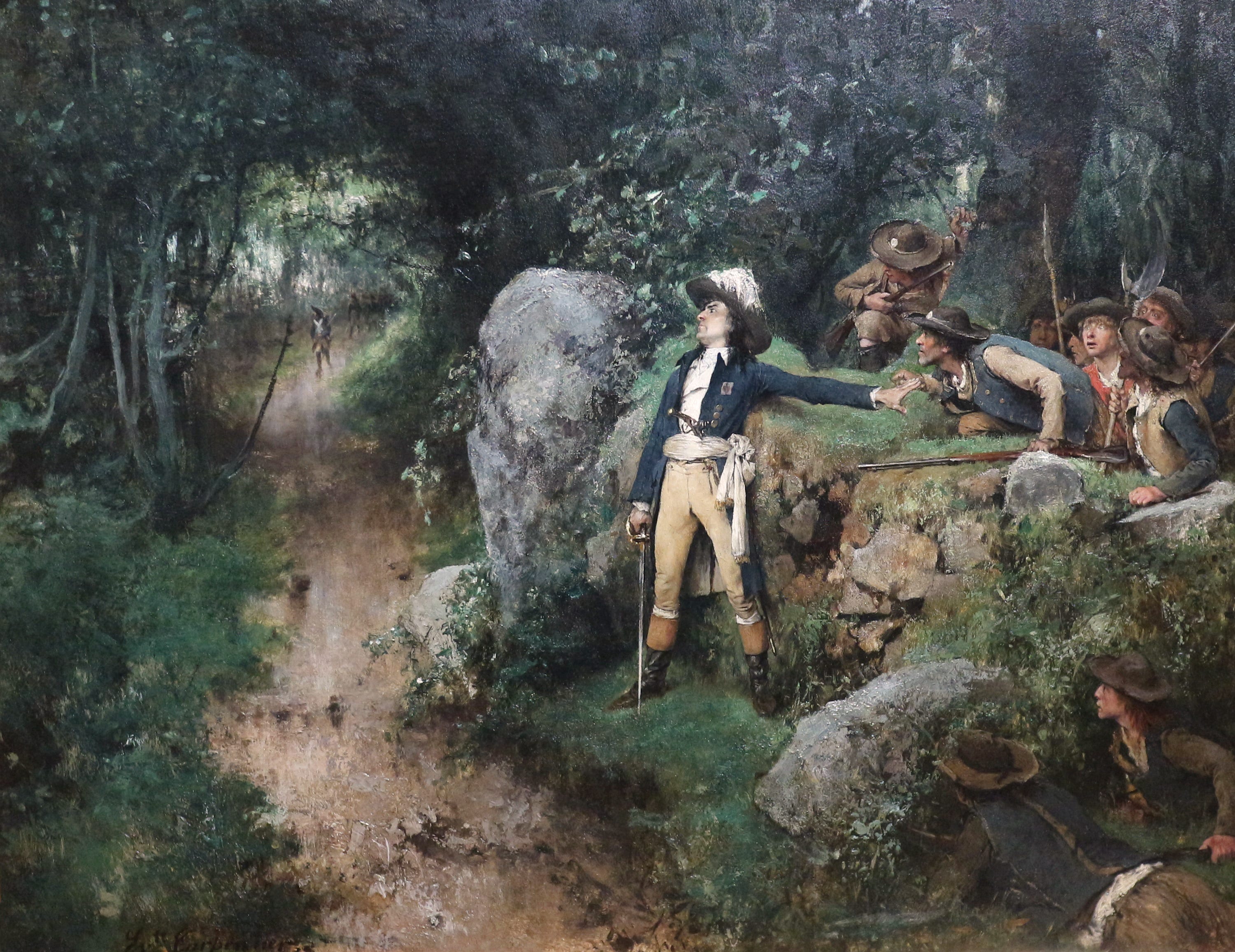
Continuing on, the group elected to pursue a band of warriors that had kidnapped women from a village they were sent to parlay with. Here we saw another example of AD&D’s surprise rules, which were briefly mentioned last session. I decided to run it, as is, allowing for the multiple segments of surprise for players to rip into their surprised opponents. Whilst the players had fun shooting fish in the barrel, it became apparent to me, that it didn’t really work. Boothill unlike AD&D presumes combat is 6 seconds a round, whereas AD&D uses a 1 minute combat round. Surprise in Boothill accordingly only provides a large speed bonus to the successful ambusher. The players in this scenario had about 3 segments of surprise, they killed about half the enemy raiders in that time. Using both melee, and gunfire, quite effectively. Going forward I will still use the AD&D method of determining surprise, as it’s quite elegant and unbiased, but I will fine tune how devastating I’d like it to be. So far I am pondering on just making it: 1-3 segments = the standard bonus to speed, 4-5 segments = a free round to unload, and a then the speed bonus. Shooting fish in the barrel is fun, and I generally prefer rules that encourage players to take more precautions to decrease their odds of being surprised, and taking actions that would increase their odds. This would require Referee adjudication of course - but that’s just the nature of the game.
Lastly we have the matter of using oracular dice to determine course of the adventure. As stated in my prior article, I generally use a save of 8+ on a 2d6 roll whenever I’m asked particular questions from players. I also use this to determine general events in the game, as stated earlier, the failed venture of El Borat and crew, revealed the Sikhs were recruiting allies. The natural response by the NPC chieftain would be to in turn recruit his own allies. The group is then contracted to be diplomats, whilst the Chieftain tends the fort. I rolled at the start of the venture for the fate of the village, on a 8+ they would be fine, they failed this roll. This then implies an attack of some kind occurred, I then rolled a further 2d6 for each side and compared the results. In this case I decided the village was attacked by raiders, raiders from the previously encountered enemy tribes. The point here is to make sure intentional encounters relate back to the main “plot” leaving random encounters for the road, as was the case with the tiger. By tying events back to the main threat, it reinforces the need for players to do something about it, as it will only get worse. Anyways, the rolls indicated the Raiders succeeded, but the villagers rolled well too. The Raiders rolled the highest, indicating they succeeded with casualties. Some d10s were arbitrarily rolled to indicate casualties on each side, I then referenced the rules in the AD&D monster manual, specifically for Nomads, and deducted these casualties from each side’s totals. I am keeping track of this on my own, and will not reveal the specifics- as my evil player’s read this blog! Some further rolls in response to player questions, such as the location of tracks, general loot, etc. Further developed the event, this then led to the players rescuing some of the tribe’s women, and eventually rejoining with the remnants of the tribe. Positive reaction rolls indicated an alliance would be created, and the Chieftain received some very dedicated allies, even if they were less numerous than desired.
The largest take-away I’ve had, is to ultimately continue to keep the game simple, and do whatever possible to preserve the vibe of the inspiration. Innovations by me to create animals using some formula, or port over whole-sale mechanics such as the surprise table, while interesting - don’t necessarily make the game better. It can work out, like it did this time, or it can make things worse, such as was the case last session. With my attempts to reinvent the wheel for parrying. Sometimes the game needs added complexity, sometimes it doesn’t. There’s a fine balancing act, I believe this is the natural result of any game. Overtime, any ongoing campaign will have situations where ruling are needed to be made by the Referee. This is the true purpose of the much maligned, Rule Zero. Whilst I enjoy the game created so far, it is so divorced form its’ roots of Boothill, which I suppose is another lesson. It’s fine to play games, the wrong - read: Not Intended - way, but you cannot claim to be playing the same game on the tin. This game isn’t about “Role-playing in the Wild West” anymore, its own thing. Would I claim it to this version to be better? Not necessarily, as stated before, Boothill’s beauty is in its simplicity. As I continue to run this game, I fear it will become less and less simple, and more and more complex, possibly even unwieldy. The challenge will of course be in finding that perfect balance, a game that perfectly captures the style of the setting, without sacrificing the freedom of the player and the sanity of the Referee.
With that, I bid you adieu, and will continue to report my progress as it comes. I will be running a further session today, the 3rd of January, at 4pm PST. You may request an invite, should you desire. Regardless, in case I don’t see you - Good morning, Good afternoon, and Good night.